|
Bayonne was first sighted by Henry Hudson in 1609. He explored the area, anchoring at Sandy and Constable Hooks. He passed through Kill van Kull and continued to the river which is known today as the Hudson River.
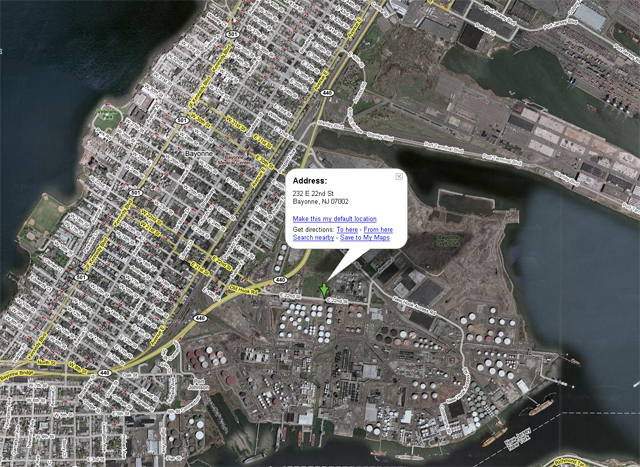
Bayonne is a peninsula located south of Jersey City, between New York and Newark bays with the Kill van Kull on the south. Staten Island lies just across the Kill, Elizabeth and Newark across Newark Bay and New York City and Brooklyn across New York Bay. The area of Bayonne is quite small, being only three miles long and the widest part of the peninsula is one mile.
Early in 1614, the States General of Holland passed an act giving to certain merchants of Amsterdam the exclusive right to trade and establish settlements within the limits of the country explored by Hudson. Not long after, a fleet of five small trading vessels arrived at Manhattan Island, New York, carrying men and supplies to build a fort.
|
|
There were a few small crude huts already built there by former Indian traders (possibly French) but now a fort for defense was erected and the settlement named New Amsterdam.
In 1629, the States General granted a bill of "Freedom and Exemptions" to all such private persons as would plant any colonies in any part of New Netherland, except Manhattan Island. The members of the West India Company were also granted special privileges and whoever of its members would plant a colony of 50 persons should be a feudal lord or "Patroon" of a tract "sixteen miles in length fronting on a navigable river, and reaching eight miles back."
On December 4th and 5th, 1654, patents were issued for land in the southerly part of Jersey City and Bayonne. September, 1655, an Indian attack killed many settlers. The families fled back to New Amsterdam. In 1658, a treaty was drawn up and the Indians sold the
|
|
Dutch settlers the property. Among the early settlers of Bayonne were the families of Vreeland, Buskirk, Van Riper, Garrabrant, Brinkerhoff, Sip, Van Winkle, Cadmus, Braecke, Salter, Van Horn and others.
Today we search the records for traces of our ancestors. It has become more than a hobby - to some of us, an obsession! We all want to know where we came from and what our people were like. Hopefully, we can help. Together, past and present Bayonnites can trade information, gather more and share in our knowledge about our ancestors who lived in Bayonne.
|